
Match New Hanover Previous Residents to an Era
New Hanover address history changes sources as the years move backward. Recorded deeds establish a parcel chain. Directories and census schedules can put named people at an address for a given period. Maps and newspaper clippings help describe the place itself. The coverage below separates known dates from gaps so a missing online result is not mistaken for a missing record.
| Source | Years it covers | Where held | What it shows |
|---|---|---|---|
| Register of Deeds records | Office records date to 1728; online cutoff is not stated and the index is partial. | Register of Deeds portal, office computer, old indexes, microfilm, and deed books. | Parcel chain, parties, instruments, and legal descriptions. |
| Wilmington directories | Identified runs from 1860-61 through 1930; Local History Room support is especially useful from 1963 to the present backward. | Local History Room, NCGenWeb, and selected DigitalNC material. | Addressed people, street sections, and directory-year context. |
| Federal census | Publicly released through 1950; the 1960 census opens in 2032. | National Archives, archives, and research databases. | Household composition and residence evidence for each census year. |
| Sanborn maps | 1889, 1893, 1898, 1904, 1910, 1915, plus 1921, 1928, 1948, and 1955 supplements. | UNC, Library of Congress, and NC Live routes. | Building footprints, use, and street context. |
| Reaves Block Books | Roughly the 1860s through the 1930s, with gaps. | New Hanover County Public Library Local History Room. | Address-organized newspaper clippings and local notices. |
For a recent question, begin with the parcel and recorded documents. When asking who lived here before at an older New Hanover address, add the directory year, historical street form, and census year before deciding whether the same location is involved.
Start a New Hanover Address with the Parcel
Use the New Hanover Tax Department property search to begin with the current address. Its Owner, Address, Parcel ID, and Advanced modes connect an address to an account. Record the parcel ID, owner name, mailing and situs addresses, property characteristics, and sale data where shown. Ownership and sale information update weekly, but the portal was in maintenance during the research pass.
A mailing address can belong to an agent, fiduciary, lender, another location, or an old destination. The situs identifies the parcel, while the parcel ID is the stronger bridge to GIS and deed work. That distinction also prevents an owner record from being treated as a past-resident record.
The New Hanover Land Records page separates recorded ownership instruments from Tax and GIS systems for location, assessment, and mapping.
Note: Tax maps and account fields organize the search, while a recorded instrument supplies the parcel's legal description.
Trace New Hanover Previous Residents Through Deeds
After recording the parcel ID and current owner, open the New Hanover Real Estate Look Up. Search the current owner as a grantee and compare the result with the legal description. The purchase deed identifies the earlier seller, or grantor. Search that seller as a grantee to locate the seller's own acquisition, then repeat the sequence. Save the grantor, grantee, execution and recording dates, document type, book or file reference, and legal description at every stop.
- Find the current tax account and copy the parcel ID, current owner, situs address, and mailing address.
- Search the current owner in the deed index and locate the purchase instrument that matches the parcel description.
- Record the seller or grantor, then search that person or entity as a grantee for an earlier purchase.
- Repeat with spelling variants, trustees, estate names, entities, middle initials, and the lot or block description when names collide.
- Separate deeds from mortgages, deeds of trust, releases, and satisfactions because those instruments do not necessarily transfer title.
- Grantor
- The party transferring an interest in a recorded instrument.
- Grantee
- The party receiving an interest in a recorded instrument.
- Chain of title
- The linked sequence of recorded transfers and related documents for a parcel.
- Legal description
- The lot, block, subdivision, metes-and-bounds, or other land description used to identify the parcel in a record.
- Enumeration district
- The geographic area used to organize a federal census, useful when locating a household in the correct schedule.
New Hanover's Register of Deeds offers Standard, Full Text, Sounds Like, and Starts With searches, plus party fields, dates, book and page, instrument number, and property-description fields. A property description can be searched by subdivision, lot, block, section, map, phase, unit, or free text.
Use New Hanover Deed Books Beyond the Portal
The Register of Deeds office has records dating to 1728, but the portal does not state a clean online cutoff. Its own warning says the index can be partial. The in-office computer search is the authoritative fallback when a period, party, or image is hard to find online. The Historic Wilmington Foundation guide also points researchers toward old index books, backscanned deeds, microfilm, and physical deed books for earlier work.
The county records-search entry point carries the online-index caution for this New Hanover address-history work.
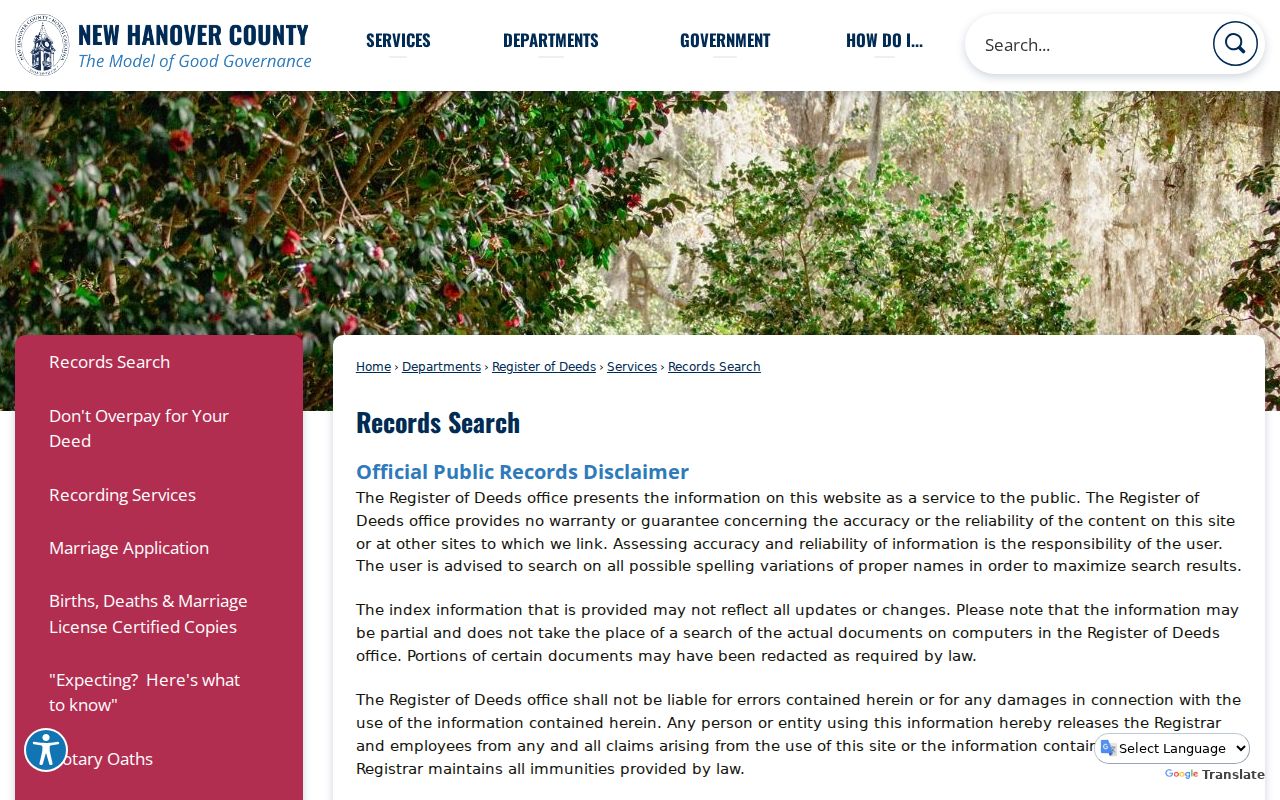
The portal is an index and image route, not a title opinion. Open the actual image when available and note any redaction or unavailable-image marker before relying on a result.
The Register of Deeds fee schedule is the source for current copies, certifications, maps, plats, and related charges.
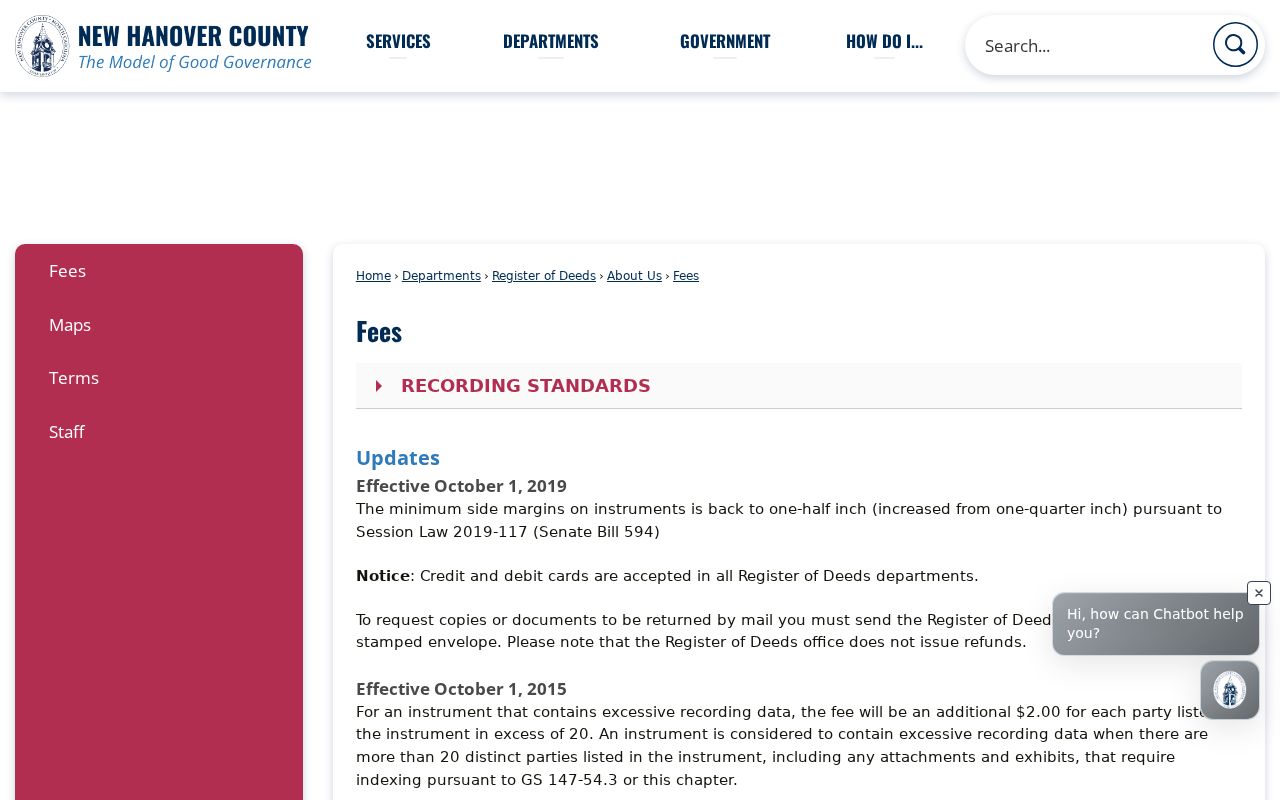
Check the fee schedule again before ordering. The county's research material says mail requests need a pre-addressed stamped envelope, and office procedures can change.
Separate the New Hanover Parcel from the Building
The Historic Wilmington Foundation guide cautions that a deed traces a parcel rather than a building. The Historic Homes guide directs researchers to deeds, city directories, newspapers, Sanborn maps, Reaves Block Books, the Port City Architecture collection, and street indexes. A parcel can have a different building history, a changing street address, or an owner who did not occupy the structure. Estate papers may appear where a sale deed does not.
County building-permit data are only a current-calendar-year map with monthly updates and municipal exclusions. They can provide supporting dates for recent activity, but they are not a historic permit archive. Wilmington uses its own permit route inside city jurisdiction.
The county Development Activity source identifies the current development route for a New Hanover address.
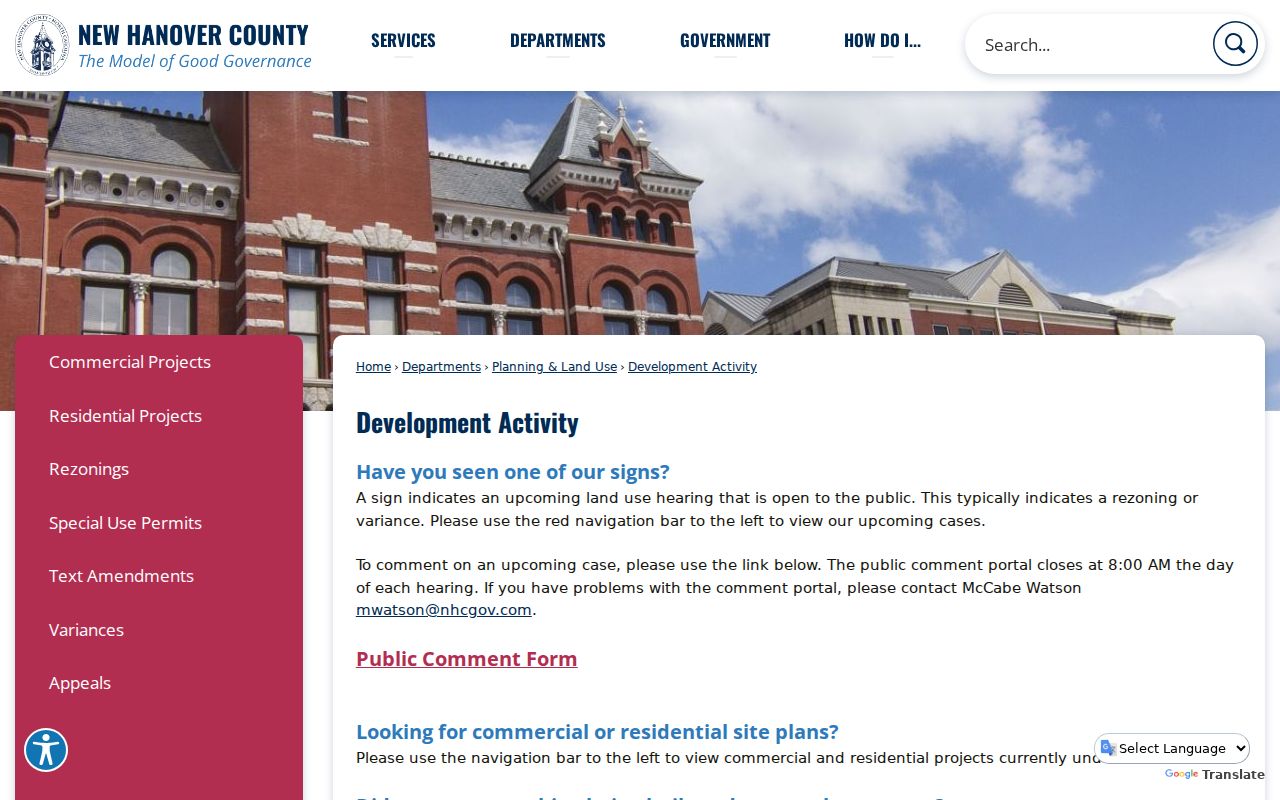
Use a current permit as one date marker. It cannot establish an older construction date or prove that a named person occupied a building.
Note: A current permit date can support a recent event but cannot supply a complete construction chronology.
Pair New Hanover Previous Residents with Directories and Census
Deeds show recorded parties. To investigate who lived at a New Hanover address in a specific period, match city directories to the closest public census year and then read the address through the street section or reverse listing. Identified Wilmington directory runs extend from 1860-61 to 1930. The Local History Room is especially useful for research from 1963 to the present backward. A later street index can list an address while alphabetic entries organize people by surname.
- Choose a directory year near the time period and search the surname plus the historical street form.
- Use the street index or a criss-cross listing to test the address from the other direction.
- Pair the directory result with the closest public census year and confirm the locality and enumeration district.
- Compare the named people, address, and date with deeds, newspapers, and map evidence before drawing a conclusion.
The New Hanover Directory Book concentrates the collection runs and how their entries read. A directory entry is an annual snapshot, not proof of ownership or a continuous record of everyone at an address. A missing name can be an omission, a different street form, an unlisted boarder, or a different municipality.
Federal census images are public through 1950 under the 72-year release rule. The next release, 1960, is scheduled for 2032. Census and directory results should be recorded with their source year, not presented as a modern address claim. This helps distinguish past residents from current records.
Translate New Hanover Address Changes
Address continuity is the common trap in New Hanover historical work. Wilmington directories preserve the Mulberry/Grace name variant and numbered-street variants. Before 1883, an entry may say it was between two streets instead of using a familiar number. The safe method is to keep the historical name, cross streets, number, and source date together, then compare them with a plat and the county GIS address point.
The 1900 Wilmington street guide helps explain the old grid. It places numerical streets north and south of Market Street and describes Second Street extending eastward toward higher numbers. An official source establishing one countywide renumbering year was not located, so avoid assigning a single year to every address change. Municipality labels can change the search results as well.
Note: An older “between” description is evidence to preserve, not an incomplete modern address that should be silently rewritten.
Date New Hanover Addresses with Maps and Clippings
Sanborn maps can test whether a structure or use appears in a given map year. Wilmington sheets are identified for 1889, 1893, 1898, 1904, 1910, and 1915, with supplements in 1921, 1928, 1948, and 1955. They can show building footprints, use, outbuildings, and street context. The Reaves Block Books add address-organized clippings, often from the 1860s through the 1930s, but their gaps matter.
The Cape Fear History resources identify local newspapers, Reaves Block Books, maps, and related collections. Search the address, historic street name, cross street, owner, and likely institution. A construction notice or obituary may not use a modern parcel number.
These sources date a place and its context. They should be read alongside the legal description and directory or census result rather than used to replace either one.
Close a New Hanover Previous Residents Trail
When the deed chain ends in an estate, death, or unexplained address break, move to probate files, obituaries, cemetery registers, and newspaper notices. The Clerk's estate records can name heirs and addresses, though protected portions can be withheld. Local cemetery resources can add a burial or family context. These are endpoints for past-resident research, not proof of a living person's location.
The New Hanover GIS cemetery service documents known abandoned or neglected cemetery plots.
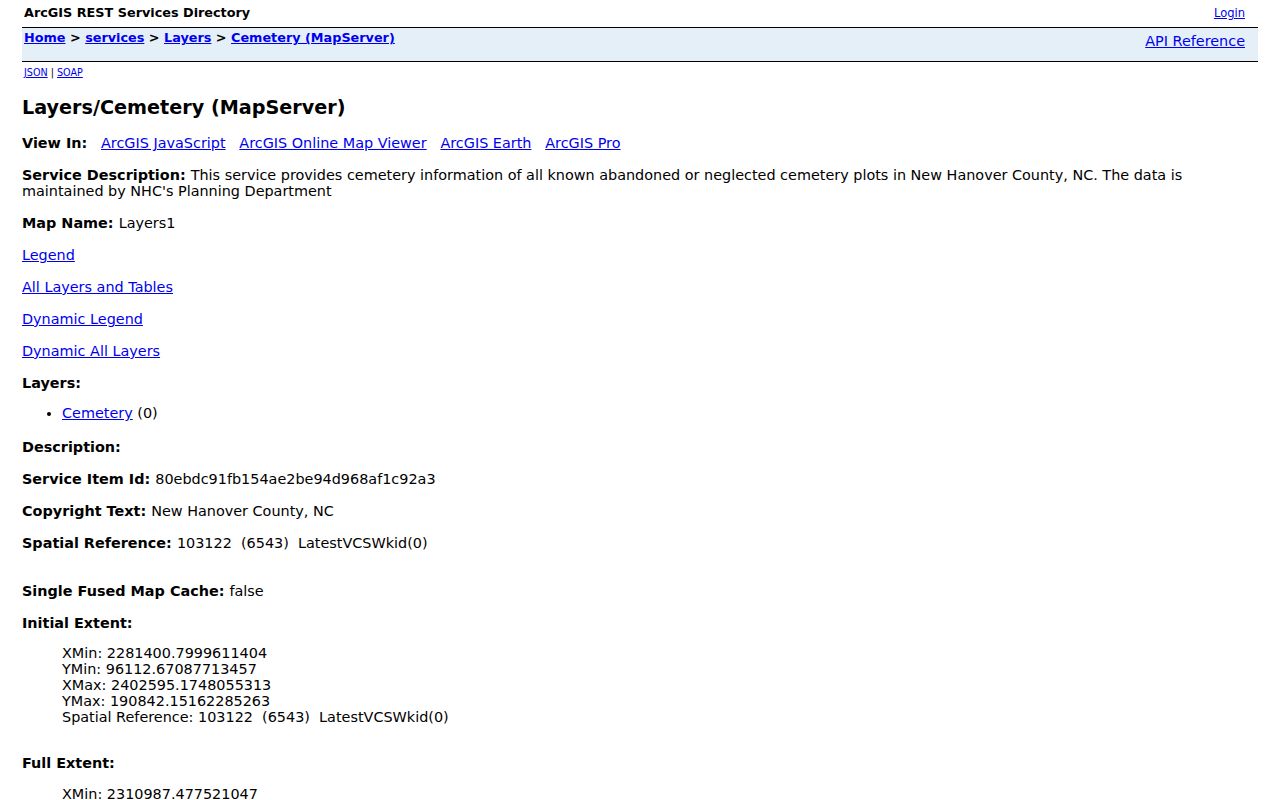
The cemetery layer is not a complete burial list. Pair it with the Library's cemetery resources, obituary indexes where available, and the appropriate estate or probate file.
Use New Hanover Previous Residents Records Lawfully
House history, family history, estate research, and civic curiosity are legitimate reasons to work through public records. The record trail remains incomplete by design. A deed may name a trustee or estate, a directory may omit someone, and a census is limited to its release period. Verify a significant fact with the office that maintains it, especially where the online index says its information is partial or may contain redactions.
Lawful use. New Hanover address-history records are for personal, lawful research. Do not use names or addresses to stalk, harass, track, intimidate, or harm another person.
Respecting the distinction between a parcel, a building, an owner, and a historical occupant makes the resulting history more accurate. It also avoids turning a dated record into a claim about a person's present life.